
Next Era of Taxi Apps: Intelligence, Automation & Beyond
The ride-hailing business around the world stands at a technology and transportation crossroads. What started out as a more convenient taxi has since transformed into a data-driven, AI enabled mobility ecosystem. As urban moving gets smarter, faster and more autonomous, the future of taxi apps is about so much more than bringing riders and drivers together. It’s about predicting demand, optimizing work and safety; it’s about reimagining mobility altogether.
Thanks to the rapidly evolving AI in taxi apps, intelligent automation and predictive analytics, ride-sharing apps are on their way to operating in a future where everything has to be fast, personalized and scalable. This transition is not hypothetical, it’s already in progress.
What’s next for taxi apps: the rise of ride-sharing, automation and new mobility. It is an era of transportation that has inspired changes in the way people think about ridesharing.
The New Era of Ride-Hailing: From On-Demand to Intelligent Mobility
Taxi applications are not reactive anymore! The forward-thinking leaders of today are moving toward proactive mobility solutions that predict what riders want, align supply in real time with demand, and respond dynamically as cities continue to grow and evolve.
This evolution is driven by three core forces:
- Artificial intelligence and machine learning
- End-to-end automation of workflows
- Advanced data analytics and real-time decision-making
These forces are redefining ride-hailing trends globally, pushing platforms toward intelligent, autonomous, and highly optimized ecosystems.
AI in Taxi Apps: Fueling Smart Choices on a Big Scale
Taxi app technology work on artificial intelligence these days. It works quietly behind the scene, analyzing millions of data points to optimize performance, reliability and user experience.
Intelligent Demand Forecasting and Dynamic Pricing
One of the most impactful applications of AI in taxi apps is demand prediction. By analyzing historical ride data, weather conditions, traffic patterns, events, and real-time user behavior, AI models can accurately forecast ride demand across locations and time windows.
This directly powers:
- Surge pricing optimization
- Driver availability planning
- Reduced rider wait times
- Improved earnings predictability for drivers
Rather than reacting to spikes, platforms can prepare for them; making ride-hailing more efficient and balanced.
Personalized Rider Experiences
Artificial intelligence empowers hyper-personalization throughout the app journey. Preferred pick-up locations, payment preferences, ride suggestions and loyalty offers – machine learning algorithms evolve with user behvior.
These AI taxi app features ensure that no two users get the same experience on the platform, which in turn greatly enhances retention, engagement and LTV.
Automation in Ride-Hailing: Redefining Operational Efficiency
AI looks at intelligence, while automation in ride-hailing is about execution. Combined, they remove any friction from even the most complex operational flows.
Automated Dispatch and Fleet Management
Time-consuming manual dispatching is giving way to smart automation that sends the most suitable drivers, considering factors such as location, traffic and vehicle type and performance history.
Automation trends in taxi services now include:
- Smart driver matching
- Automated trip allocation
- Real-time rerouting based on congestion
- Predictive fleet maintenance scheduling
This reduces idle time, lowers fuel consumption, and ensures consistent service quality.
Seamless Payments, Refunds, and Support
Automation has also transformed backend operations. Payment reconciliation, refunds, invoicing, and dispute resolution are increasingly handled through automated systems powered by rules engines and AI-assisted workflows.
For ride-hailing businesses, this means:
- Lower operational costs
- Faster issue resolution
- Reduced dependency on manual support teams
Machine Learning in Ride-Hailing: Learning, Adapting, Improving
Machine learning algorithms are central to modern taxi app development trends, enabling platforms to continuously learn from user interactions and operational data.
Route Optimization and Traffic Intelligence
ML models analyze live traffic feeds, road closures, historical congestion data, and driver behavior to recommend optimal routes in real time. This improves ETA accuracy, reduces trip duration, and enhances rider satisfaction.
Over time, these models become smarter—learning which routes work best under specific conditions.
Fraud Detection and Platform Trust
Machine learning also plays a critical role in identifying suspicious activities such as fake bookings, payment fraud, or driver misconduct. By analyzing behavioral patterns, ML systems can flag anomalies before they escalate.
This directly answers a critical industry question: can AI improve safety and efficiency in taxi apps? The answer is a definitive yes—by making platforms more secure, reliable, and trustworthy.
Predictive Analytics: The Strategic Advantage in Ride-Hailing
Predictive analytics is emerging as a game-changer in taxi app industry trends. It allows platforms to move from descriptive insights to foresight-driven decision-making.
Benefits of Predictive Analytics in Ride-Hailing
Using predictive models, ride-hailing apps can:
- Forecast peak demand zones
- Predict driver churn and rider drop-offs
- Optimize pricing strategies
- Improve vehicle utilization rates
The benefits go beyond efficiency—they enable long-term scalability and smarter business planning.
For operators asking how ride-hailing apps can stay competitive, predictive analytics is a clear differentiator.
Autonomous Vehicles: Will Driverless Taxis Replace Human Drivers?
The rise of autonomous driving technology often raises one critical question: will driverless taxis replace human drivers?
In the near future, full replacement is unlikely. Instead, the industry is moving toward hybrid models where autonomous vehicles coexist with human-driven fleets—especially in controlled environments like campuses, airports, or specific city zones.
The Role of AI in Autonomous Ride-Hailing
AI-powered perception systems, computer vision, and real-time decision engines are enabling semi-autonomous and autonomous taxi pilots. While regulatory and infrastructure challenges remain, autonomous ride-hailing will play a growing role in:
- Reducing operational costs
- Improving safety consistency
- Addressing driver shortages
Autonomy is not about elimination—it’s about augmentation.
Emerging Technologies Shaping the Future of Taxi Apps
Beyond AI and automation, several technologies are accelerating taxi app development trends worldwide.
Internet of Things (IoT)
IoT-enabled vehicles provide real-time data on vehicle health, fuel efficiency, driving behavior, and location tracking—improving fleet management and safety compliance.
Blockchain for Transparency
Blockchain is gaining traction for secure payments, transparent fare calculations, and tamper-proof ride histories—especially in enterprise and government-backed mobility platforms.
5G Connectivity
Ultra-low latency and high-speed connectivity enable real-time data processing, smoother in-app experiences, and faster AI model responses—critical for future-ready ride-hailing platforms.
How Taxi Apps Are Adapting to Future Transportation Trends
The future of mobility extends beyond point-to-point rides. Taxi apps are evolving into integrated mobility platforms that support:
- Ride pooling and shared mobility
- Electric vehicle integration
- Multimodal transportation (metro, bikes, scooters)
- Sustainable, carbon-aware routing
This adaptability ensures alignment with smart city initiatives and future transportation policies.
Future Taxi App Features Powered by AI
As user expectations evolve, future taxi app features powered by AI will become standard, not optional.
Riders will increasingly expect:
- Voice-based ride booking using AI assistants
- Real-time safety monitoring with anomaly detection
- Predictive ETAs with near-zero variance
- Emotion-aware customer support bots
- Context-aware pricing and recommendations
These AI taxi app features will define the competitive landscape of tomorrow.
Building for the Future: A Strategic Imperative
The future of taxi apps is not just about adopting new technologies, it’s about building resilient, intelligent platforms that can adapt to continuous change.
For businesses investing in ride-hailing solutions, the focus must be on:
- Scalable AI architectures
- Automation-first workflows
- Data-driven product strategies
- Continuous innovation aligned with user expectations
Platforms that embrace this mindset will lead the next decade of mobility.
Frequently Asked Question
Next-gen taxi platforms will be defined by AI, Automation, ML, Predictive Analytics, IoT and by 5G and Blockchain.
AI drives intelligence in demand forecasting, route optimization, dynamic pricing, personalization and fraud detection, enabling to make the operations more efficient.
Autonomous taxis will complement traditional ride-hailing models rather than fully replace them in the near future.
Automation will streamline dispatch, payments, customer support, fleet management, and backend operations, reducing costs and manual effort.
Through AI-based decision-making, automation, predictive analytics and a relentless focus on UX and efficiency.
Riders will demand more intelligent personalization, predictive ETAs, greater safety and voice-activated booking, all in an effortless and automated experience.
Recent Blogs

Launching a taxi booking platform today is easier than ever. With ready-made solutions like TaxiOnGo, taxi businesses can quickly go digital with rider apps, driver apps, and complete fleet dashboards. But here’s the real question most operators ask after launch: How do taxi apps make money sustainably? Because building an app is only step one. […] Read more
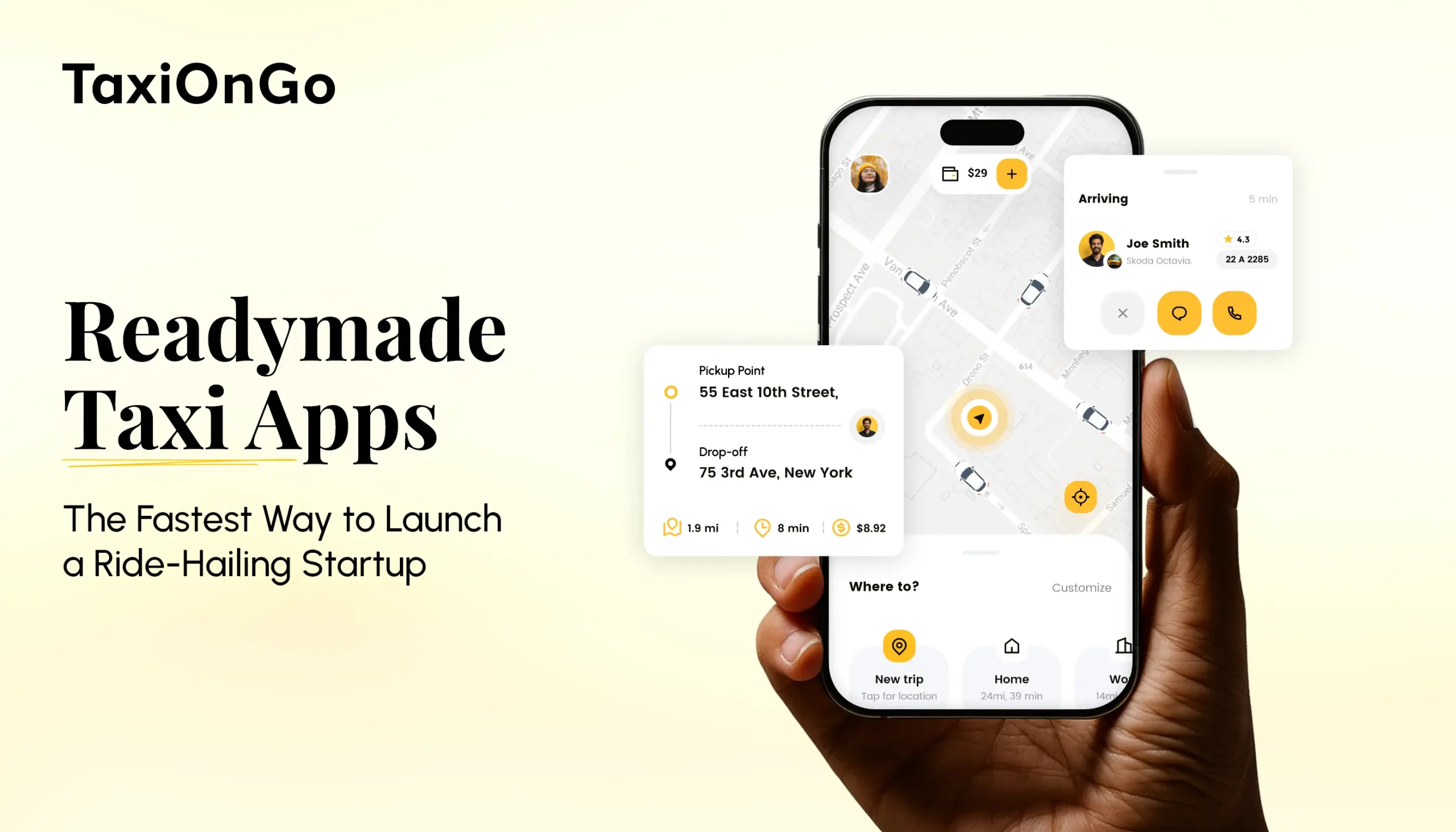
The ride-hailing industry is no longer dominated by just global giants. In 2026, the real growth is happening in local markets, niche segments, and region-specific mobility services. Cities are expanding, commuter behavior is changing, and customers increasingly prefer reliable, locally operated ride services over generic global platforms. For entrepreneurs and fleet owners, this shift presents […] Read more

A taxi business can grow only when its drivers are supported, empowered, and equipped with the right tools. Many companies focus on creating the best cab booking app for riders, but the real foundation of a successful taxi platform lies in delivering a smooth, stress-free experience for drivers. When drivers feel confident using the platform, […] Read more